Goals
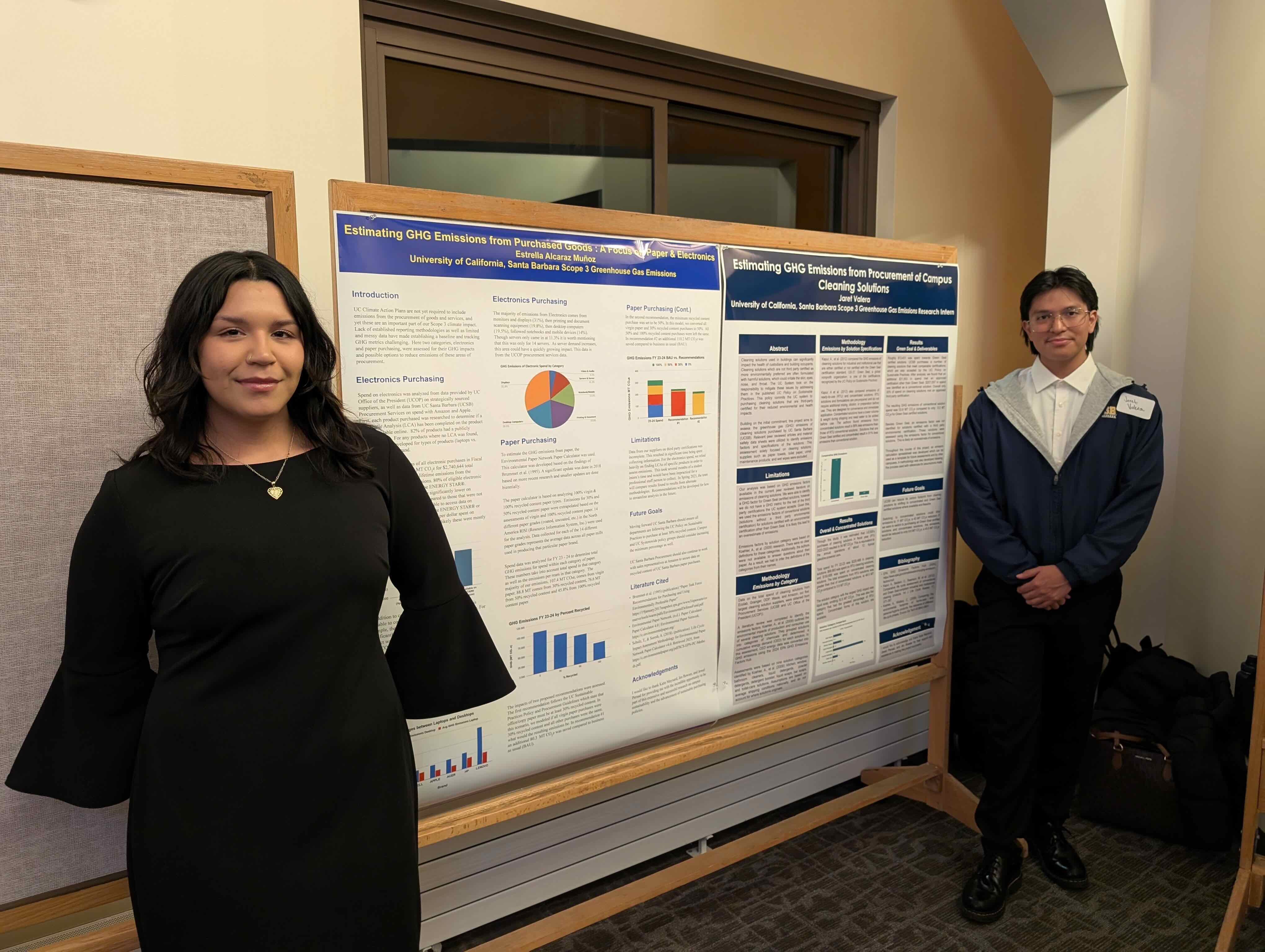
The main goal of the project was to estimate greenhouse gas (GHG) emissions from paper and electronics purchased by the university, which was completed by analyzing various purchasing data sets provided by the UC Office of the President (UCOP) and UC Santa Barbara (UCSB).
This was a part of a larger effort to explore the addition of a more robust section on procurement of goods and services to the UCSB Climate Action Plan. In order to do that, methodologies needed to be identified or created to set baseline data and track ongoing metrics for emissions in this area.
Deliverables
Outcomes/Metrics
Overall Metrics
- Developed a methodology for assessing GHG emissions of paper and electronic purchases.
- Created template spreadsheets that can be used to assess future years' data.
- Drafted a section of the 2025 Draft Climate Action Plan.
Electronic Metrics:
- Estimated total emissions of all electronic purchases in fiscal year (FY) 23-24 was 936 MT CO2e for a total of $2,740,644 spent (based on lifetime emissions, not annual emissions)
- Data also showed that laptop emissions are significantly lower than desktop emissions, especially considering that laptops support remote work and are easier to transport between work and home spaces.
- Majority of emissions from electronics comes from monitors and displays (31%), then printing and document scanning equipment (19.8%), then desktop computers (19.5%), followed by notebooks and mobile devices (14%).
- Server emissions came in at 11.3%, though this only accounted for 14 servers; as server demand increases, this area could quickly have a growing impact.
- 80% of eligible electronic purchases were confirmed to be ENERGY STAR®, and emissions per dollar spent were significantly lower on ENERGY STAR® products, compared to those that were not ENERGY STAR®.
Paper Metrics:
- Estimated total emissions of all paper purchases in FY 23-24 was 318.6 MT CO2e.
- Majority of emissions, 107.4 MT CO2e, came from virgin paper.
- 88.8 MT came from 30% recycled content paper, 76.6 MT from 50% recycled content, and 45.8 MT from 100% recycled content paper.
For the future, the hope is that all UCSB departments will follow the UC policy on Sustainable Practices by purchasing at least 30% recycled content for paper. In electronics, UCSB should strictly enforce its policy on ENERGY STAR® purchasing and strive to replace desktops with laptop computers.
About
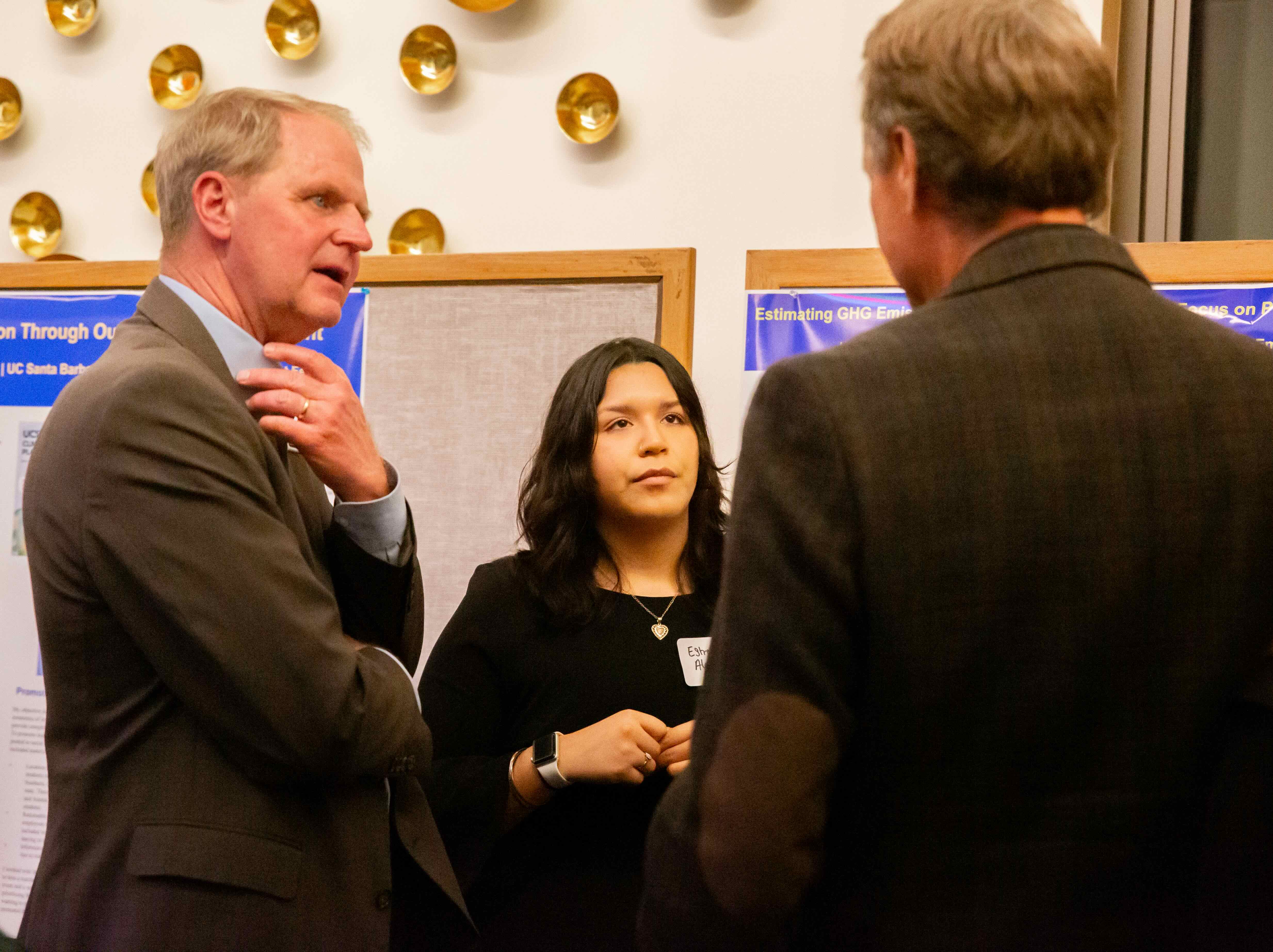
This project consisted of estimating greenhouse gas emissions from the procurement of goods and services of paper and electronics purchased by the university, which falls under Scope 3 emissions. Previous UC Climate Action Plans (CAP) have yet to include reports of emissions from the procurement of goods and services, which are essential to assessing the impact of Scope 3 emissions. Estrella’s role involved assessing paper and electronic GHG emissions and creating tracking systems that allowed for proper visualization of contributions from these emissions.
Estrella collected data from numerous purchasing sets, calculated emissions for paper and electronics for various fiscal years, and created a tracking system to efficiently record emissions and product types. Her work can be found in the upcoming 2026 Climate Action Plan, which summarizes the findings of her project.

Partners
- Jen Bowser, Chancellor's Campus Sustainability Committee
- Katie Maynard, Sustainability Internships and Community Resources
- Jewel Persad, Office of the Vice Chancellor of Administrative Services
- Jaret Valera, Sustainability Internships and Community Resources
Funders
- This project was originally funded by the Learning Aligned Employment Program (LAEP), but continued to be funded through the Sustainability Internships and Community Resources (SICR) department with support from Federal Work Study.
Project Leads
- Estrella Alcaraz Muñoz
Ways to Get Involved
- UCSB is currently seeking feedback on the Draft Climate Action Plan. Please check it out and offer your feedback here!
- In the future, UCSB Sustainability would be interested in continuing to refine how we report and set metrics on GHG emissions related to the procurement of goods and services.
Related Projects & More Info
Estimating GHG Emissions from Procurement of Campus Cleaning Solutions (Estrella's work was one part of a larger effort to research and develop metrics to assess Scope 3 emissions.)