Goals
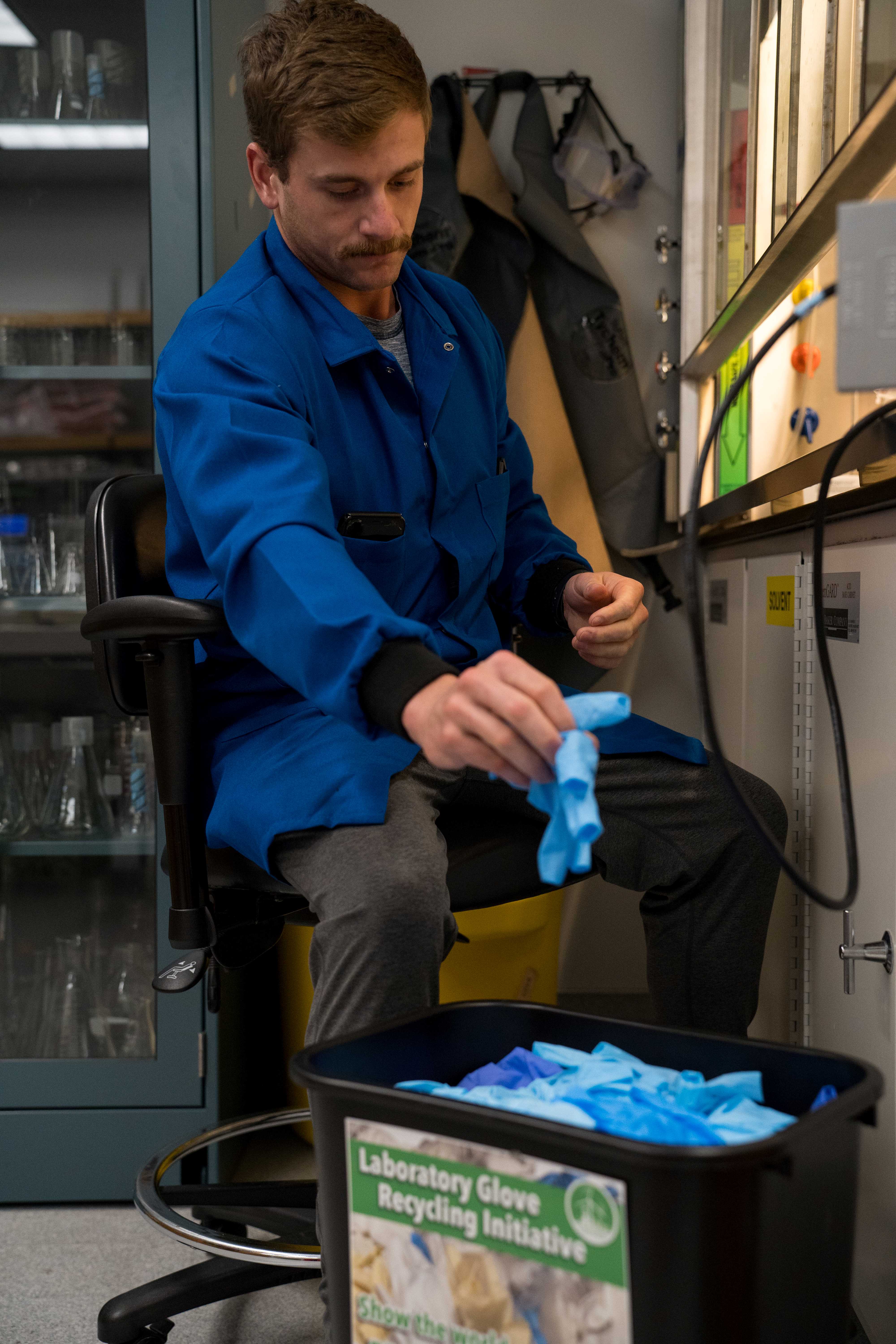
The goal of the LabRATS project is to increase awareness for lab sustainability while creating a more inquisitive environment that encourages researchers to be mindful of the environmental impact of the day to day operations of research. Many researchers are aware of the sustainability movement and doing research with substantial positive environmental impacts. There are few resources though for supporting researchers to reduce the impact of their processes and equipment. LabRATS is one of the few programs with this focus.
PACES (Program for the Assessment and Certification for the Environment and Sustainability) has a similar goal, but is aimed towards offices, events, and sports and athletics. Providing Green Business Certifications mitigates the direct effects of campus operations on the environment, promoting long-term sustainability practices.
Deliverables
We are currently adapting Amber's deliverables to ADA guidelines. Please contact Katie Maynard kcmaynard@ucsb.edu if you are interested in viewing a copy.
Outcomes/Metrics
Project metrics will be tracked through:
- # of UCSB labs, departments, and events certified
- # of people served through events hosted by PACES and LabRATS
Qualitative feedback is also given by organizations that choose to partner with LabRATs and PACES, which is used to make improvements to the program.
About
LabRATS aims to increase conservation efforts within laboratory settings while educating researchers on integrating sustainability into their daily lab operations. Officially launching in 2006, the program plays a key role in UCSB's efforts to reduce water consumption, energy usage, and material resources within labs. Labs are frequently overlooked in terms of waste generation, but several materials go into them such as plastic, paper, metal, and more. Through this program, students interns coordinate with researchers to integrate proper sustainability practices and processes into laboratories.
Amber Nguyen, the Green Lab and Office Coordinator, supports LabRATS through the LabSYNC program. LabSYNC offers sustainability certifications to interested labs and provides the resources needed for implementation.When a lab expresses interest in participating, Amber sends out a Qualtrics survey to evaluate current lab practices. The survey assesses areas such as the lab's waste management, energy usage, equipment usage, lab supply procurement, and other aspects of lab functioning. Based on these responses, labs are evaluated and then certified on a tiered light spectrum that reflects their sustainability level.
In addition to her work with LabRATS, Amber also supports the Program for the Assessment and Certification for the Environment and Sustainability (PACES), which provides sustainability certification to events. Initial steps include interviewing and a pre-event assessment that evaluates organizers’ existing practices. Following the assessment, Amber offers tailored recommendations on waste reduction, proper catering techniques, and other environmentally-friendly accommodations. She also conducts a mid-event check-in assessment before submitting a final report with recommendations for improvement in future events. As of Winter 2026, Amber is working with the Professional Women’s Association (PWA) on their upcoming conference scheduled for March 2026.
Since beginning her role in September 2025, Amber has been focused on outreach and preparing educational materials to better inform the campus community about sustainable lab practices. She recently hosted a tabling event at the Graduate Student Association (GSA) Lounge to engage directly with graduate students on what LabRATS can offer. Amber also serves on the Waste and Procurement Subcommittee, where she discusses sustainability practices with other campus organizations such as the Associated Students (AS) Recycling and the Environmental Leadership Incubator (ELI). Additionally, she is planning a webinar for Winter 2026 that will bring together interested labs to explore strategies for improving sustainability.
Separately from this program, Housing Dining and Auxiliary Enterprises also works with the Santa Barbara Green Business Program to certify their dining halls and campus-run retail locations as Green Restaurants. UCSB’s Autoshop is also certified with the Santa Barbara Green Business Association.
Partners
- Hector Acuña, Environmental Health & Safety
- Jen Bowser, Chancellor’s Campus Sustainability Committee
- Jewel Persad, Office of the Vice Chancellor of Administrative Services
Project Leads
- Amber Nguyen
Ways to Get Involved
If you are interested in participating in the LabRATs or PACES initiatives, contact Amber Nguyen ambernguyen@ucsb.edu for more information.